
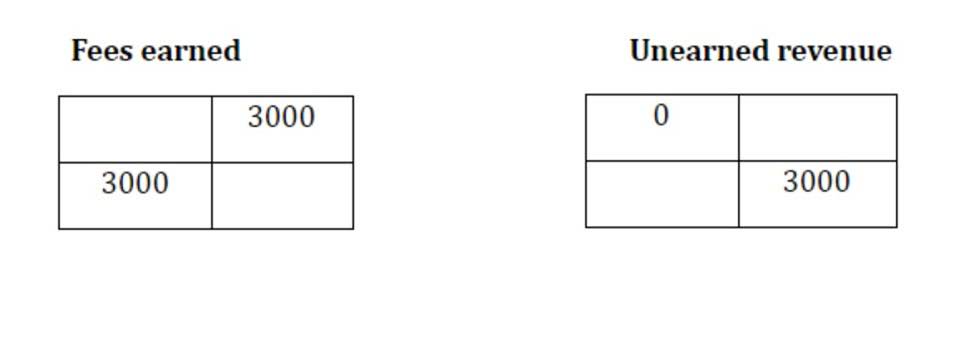
In a general ledger, or any other accounting journal, one always sees columns marked “debit” and “credit.” The debit column is always to the left of the credit column. Under this column, normal balance of accounts the difference between the debit and the credit is recorded. If the debit is larger than the credit, the resultant difference is a debit, and this is listed as a numerical figure.

This allows organizations to identify errors, mistakes and pitfalls which can be remedied quickly and prevent larger issues in the future. After each semester or quarter, your grade point average (GPA) is updated with new information on your performance in classes you completed. This gives you timely grading information with which to make decisions about your schooling. Let’s recap which accounts have a Normal Debit Balance and which accounts have a Normal Credit Balance. Liabilities (on the right of the equation, the credit side) have a Normal Credit Balance. Liabilities (what a company owes to third parties like vendors or banks) are on the right side of the Accounting Equation.
Revenue
We want to specifically keep track of Dividends in a separate account so we assign it a Normal Debit Balance. Equity (what a company owes to its owner(s)) is on the right side of the Accounting Equation. If an account has a Normal Debit Balance, we’d expect that balance to appear in the Debit (left) side of a column. If an account has a Normal Credit Balance, we’d expect that balance to appear in the Credit (right) side of a column.
Each account type (Assets, Liabilities, Equity, Revenue, Expenses) is assigned a Normal Balance based on where it falls in the Accounting Equation. The debit side of a liability account represents the amount of money that the company has paid to its creditors. Cash equivalents are short-term investments that you can convert quickly into cash with normal balances.
What is a normal balance?
If you want the convenience of being able to access your money but are looking for a higher return than you’d get from a typical checking account, you have other options to consider. Experts typically recommend keeping three to six months’ worth of living expenses stashed away for emergencies in a high-interest savings account. But how much money you keep on hand for everyday expenses is a different story. Once an asset is recorded on the books, the value of that asset must remain at its historical cost, even if its value in the market changes. She believes this is a bargain and perceives the value to be more at $60,000 in the current market.
For instance, when a business buys a piece of equipment, it would debit the Equipment account. The ending account balance is found by calculating the difference between debits and credits for each account. You will often see the terms debit and credit represented in shorthand, written as DR or dr and CR or cr, respectively.
Normal Balances of Accounts Chart
The accounting department of a company and its auditors are employees of two different companies. The auditors of a company are required to be employed by a different company so that there is independence. Some companies that operate on a global scale may be able to report their financial statements using IFRS.
How much money you should keep in your checking account depends on your financial goals and circumstances. The full disclosure principle states that a business must report any business activities that could affect what is reported on the financial statements. These activities could be nonfinancial in nature or be supplemental details not readily available on the main financial statement.
0 Comments